Why Your Radiators Aren’t Heating Evenly — And How To Fix It
Many people with steam or hot-water heating notice that some rooms are warm, others are chilly, and a few rooms get too hot. Besides being uncomfortable, uneven heating can indicate that your system is not working well and could be wasting energy or even on the verge of breaking down.
The good news is that many causes of uneven radiator heating are known and can often be fixed easily. This guide will show you why radiators stop heating evenly, what you can check yourself, and when you should call a professional.
Common Signs of Uneven Radiator Heating
Uneven heating can show up in a few ways, depending on the type of system you have.
- Some radiators heat fully while others stay lukewarm or cold
- A radiator is hot at the bottom but cold at the top
- Radiators near the boiler heat faster than those farther away
- One side of the room stays cold even though the radiator feels warm
- Radiators make banging, hissing, or gurgling noises
Each of these symptoms points to a different problem, but all of them affect how heat spreads through your home.
Why Do Radiators Stop Heating Evenly?
Uneven radiator heating usually happens because of several problems. Most of the time, it’s a mix of age, airflow problems, and a system that is not balanced.
Air trapped in the system
Air is the main reason radiators don’t heat evenly.
In hot water systems, trapped air prevents water from circulating fully through the radiator. This often causes the top of the radiator to stay cold while the bottom warms up.
In steam systems, air must escape through vents before steam can enter the radiator. If vents are blocked or not working properly, steam cannot properly fill the radiator.
Air problems tend to build up slowly, so uneven heating often gets worse over time.
Poor system balancing
Heating systems are meant to spread heat evenly, but over time, changes can upset that balance.
- Radiators closer to the boiler may receive heat first and stay hotter longer
- Radiators farther away may not get enough steam or hot water
- Upgrades or repairs may change flow patterns without rebalancing
If the system is out of balance, some rooms get too hot while others never feel warm enough.
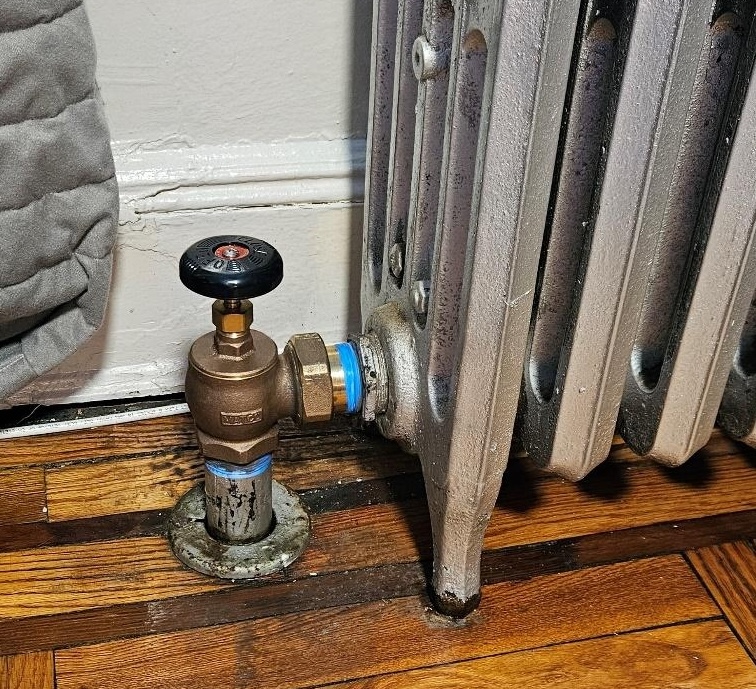
Faulty or aging radiator valves
Radiator valves control how much steam or hot water goes into each radiator. Over time, these valves can wear out, get stuck, or stop working properly.
- A valve that looks open may not actually allow full flow
- Corrosion can restrict movement inside the valve
- Old valves may no longer regulate heat properly
This happens a lot in older homes where the original parts are still being used.
Improper pipe pitch or drainage issues
Radiators and supply pipes need to be tilted a little so water or condensation can drain the right way.
- If pipes settle or shift over time, water can pool in the system
- Standing water blocks steam flow and reduces heat output
- Pooling water often causes knocking or banging sounds
Even a small change in angle can affect how evenly a radiator heats.
Boiler pressure or temperature problems
The boiler is the heart of the whole heating system.
- Low pressure may prevent steam from reaching distant radiators
- Excessive pressure can cause uneven heating and noisy operation
- Wrong water temperature makes it harder for water to move through the system
If the boiler isn’t working within the right settings, uneven radiator heating is almost certain.
Sediment or internal buildup
In hot water systems, minerals or heavy dirt can build up and block the flow inside radiators and pipes.
- Sediment settles at the bottom of radiators
- Flow becomes uneven or partially blocked
- Heat output drops even though the system is running
This issue is more common in older systems. The system keeps running, but it doesn’t put out as much heat.
Some fixes are simple for homeowners, while others need special tools and experience. Knowing the difference helps you avoid damage or safety problems.
Bleed Hot Water Radiators
If you have a hot water system and the tops of your radiators are cold, the first step is usually to bleed out trapped air.
- Turn the heating system on
- Use a radiator key to open the bleed valve
- Release air until water flows steadily
- Close the valve and recheck the heating
Often, this simple step is enough to get your radiators heating evenly again.
Check radiator valves
Check that radiator valves are fully open and not stuck.
- Gently turn the valve counterclockwise to confirm it opens
- Avoid forcing old or corroded valves
- If a valve doesn’t respond, it may need replacement
For steam systems, radiator valves should be either fully open or fully closed, never left halfway.
Inspect radiator vents on steam systems
Steam radiator vents are very important for even heating.
- A vent that stays closed traps air
- A vent that stays open leaks steam
- Different rooms may need different vent sizes
Replacing, adjusting, or changing vent sizes can often make a big difference in heating balance. Radiators should tilt slightly toward the supply valve so condensate can drain.
- Use a level to check pitch
- Add shims under the radiator feet if needed
- Never force pipes into position
This step often makes the system quieter and helps heat spread more evenly.
Schedule a Professional Balancing and Inspection
If these basic fixes don’t work, it’s usually time to call a professional.
- Technicians can measure system pressure and flow
- They can balance radiators for even heat distribution
- They can identify hidden issues like internal blockages or boiler problems
A professional tune-up can often make your home more comfortable without needing big system upgrades.
Why uneven heating shouldn’t be ignored
Uneven radiator heating is not just about comfort.
- Cold rooms increase heating costs as thermostats are turned higher
- Overworked boilers experience more wear and tear
- Moisture and condensation problems can develop in cold areas
- Small issues often turn into expensive repairs if ignored
Fixing the problem early helps protect your heating system and your home.
Final Thoughts
If your radiators aren’t heating evenly, it’s a sign that something is wrong. Air in the system, worn valves, poor drainage, or imbalance can all cause problems with heat distribution. Some fixes are simple, but others need a heating professional, especially in older or historic homes.
With regular maintenance and quick adjustments, most radiator systems can deliver steady, comfortable heat throughout your home. Knowing the causes and solutions helps you stay in control and keep your heating system working well when it gets cold.
American Vintage Home – Your Radiator Specialists
If your radiators aren’t heating evenly, the problem is rarely something you should ignore or live with all winter. Uneven heat is often a sign that your system needs adjustment, maintenance, or expert attention, especially in older or historic homes where radiator systems require specialized care. The experienced team at American Vintage Home understands the unique challenges of steam and hot water radiator systems and knows how to restore balanced, reliable heat without compromising your home’s character. If some rooms are cold, others are overheating, or your system is making noise, schedule a professional inspection today and get your radiators working the way they were meant to.